 Related articles
sábado, 6 de junio de 2020


Top Users Command In Linux Operating System With Descriptive Definitions

Linux is a command line interface and has a graphical interface as well. But the only thing we should know how we interact with Linux tools and applications with the help of command line. This is the basic thing of Linux. As you can do things manually by simple clicking over the programs just like windows to open an applications. But if you don't have any idea about commands of Linux and definitely you also don't know about the Linux terminal. You cannot explore Linux deeply. Because terminal is the brain of the Linux and you can do everything by using Linux terminal in any Linux distribution. So, if you wanna work over the Linux distro then you should know about the commands as well.
In this blog you will get a content about commands of Linux which are collectively related to the system users. That means if you wanna know any kind of information about the users of the system like username passwords and many more.
id
The "id" command is used in Linux operating system for the sake of getting knowledge about active user id with login and group. There may be different users and you wanna get a particular id of the user who is active at that time so for this you just have to type this command over the terminal.last
The "last" command is used in Linux operating system to show the information about the last logins on the system. If you forget by which user id you have logged in at last time. So for this information you can search login detail by using this command.who
The "who" command is used in Linux distributions to display the information about the current user which a an active profile over the Linux operating system. If you are in the system and you don't know about that active user and suddenly you have to know about that user detail so you can get the info by using this command.groupadd
The "groupadd admin" is the command which is used in Linux operating system to add a group in the Linux system to gave the privileges to that group.useradd
The "useradd" command is used in Linux operating system to add user or users to a specific group. If you wanna add a user name Umer so for this matter you just have to write a command i.e. useradd -c "Umer".userdel
The "userdel" command is used in Linux operating system for the purpose to delete any user or users from the particular group present in the linux operating system. For example "userdel Umer" this command will delete the user named Umer.adduser
The "adduser" command is a simple command used to create directly any user in the system. There is no need to make a group for this. You just have to type the command with user name like adduser Umer, it will created a user by name Umer.usermod
The "usermod" is a command used in Linux operating system to modify the information of any particular user. You can edit or delete information of any particular user in the Linux operating system.Critical VMware Cloud Director Flaw Lets Hackers Take Over Corporate Servers
Cybersecurity researchers today disclosed details for a new vulnerability in VMware's Cloud Director platform that could potentially allow an attacker to gain access to sensitive information and control private clouds within an entire infrastructure. Tracked as CVE-2020-3956, the code injection flaw stems from an improper input handling that could be abused by an authenticated attacker to
via The Hacker News
via The Hacker News
Related word
viernes, 5 de junio de 2020
Difference Between Hacker, Programmer, And Developer
There are numerous sprite debates and discussions on the differences between hackers, developers, and programmers. With most descriptions, however, there is usually a slight flaw in at least one or two serious ways. These terms are all traditionally misused and misunderstood, with many of us frequently mixing them up as an all-encompassing definition of anyone working on the Software realm.

However, if you are looking to clarify your project goals and business needs adequately, it is essential that you understand that all these terms do not all represent the same thing (although a person with the ability to program a computer can use different skills to accomplish various outcomes).
What's more, it is also quite important for you to differentiate between these three terms if you are working with software development groups and the fact that they cannot be interchanged. This excerpt seeks to break it all down for you mainly-the vital difference between hackers, developers, and programmers, their actual tasks, as well as their relationship.
The Hacker
A hacker is a computer expert who uses his knowledge of computer networking, programming, cryptography, and databases to overcome a problem in the system. Hackers are more concerned with availing the concept as opposed to minding about the long-term quality. And although a hacker can conceptualize about how will ultimately be created while frantically writing code, the role is primarily about speed.
A hacker, as well as hacking,' are most useful in dealing with emergency circumstances or when prototyping an item. Hackers and the profession of hacking, in general, is not concerned with the ultimate effect of the code.
Hackers make things. They typically alter the things programmers create and transform them to function differently as well as also writing codes. While "hacker" can refer to any skilled technical person, the term has become associated with computer security, someone who, with their technical knowledge, uses bugs or exploits to break into computer systems.
The Programmer
A programmer is an individual equipped with the expertise to write codes. Programmers usually master in a single or multiple programming languages and boast vast knowledge on related areas also. Their roles are relatively procedural and mandate for total concentration not to mention refined skills.
A programmer is solely focused both in writing codes as well as getting features appropriately performed so that these features are accessible for integration and later use. Programming is merely the process of swinging the hammer and adequately creating the software.
Usually, it is easy to identify that an individual is in programming mode since they often have a concentrated gaze and are deep in the zone.' Programmers are normally internalizing the system they are operating as well as editing and writing pieces of something that can only best be described as a long algebra problem.'
The Developer
Developers are typically creators. However, not anyone that is an expert at writing codes can be a developer. Developers are experts at identifying ways around various problems as well as plugging together components to fulfill some requirements. These professionals solve problems or create things by adhering to a specific set of principles (design and implementation).
This set of principles includes attributes such as maintainability, performance, robustness, security, and scale among others. They solve problems in a systematic manner. Ideally, this is what distinguishes programmers, developers, and hackers.
In A Nutshell:
In all simplicity, these three professionals solve various problems using code. A programmer is an encompassing term that means a problem solver, a developer is a trained programmer (formal) who besides resolving issues achieves it in an organized and methodical manner likely instilled in the course of their formal education, and a hacker is a tinkerer/creator.
Despite their differences in individual meaning and professional capacities, these terms, however, can interrelate with each other quite effectively. In fact, it is possible for you to combine the skills to your benefit. In reality, all developers and hackers are programmers. However, despite their expertise, not many developers and programmers are creative enough to warrant an identity as hackers.
Finally, although hackers and programmers are quite impressive, they are however not experienced or educated enough to warrant consideration as developers. The similarity, however, is that all work to create code, each in their specified manner.
Ideally, anyone would work to be all the above-as creative as a hacker, though, somewhat better experienced and formally trained to design software as opposed to only hacking.
Nonetheless, even if you lack the creativity, experience, or education, or either to necessarily create a broad application, it is still worth noting that you are still ideally a programmer. And in case you did not know, solving a problem through code is by itself, a superpower!
@£√£RYTHING NT
Related posts
What Is Brave Browser And How Does It Compares To Chrome ?
There are more competing web browsers than ever, with many serving different niches. One example is Brave, which has an unapologetic focus on user privacy and comes with a radical reimagining of how online advertising ought to work.
Brave is based on Chromium, the open-source code that forms the basis for Google Chrome. But is it any good? And for those using Google Chrome, is it worth switching to Brave?
A Brief History of Brave
When Brendan Eich and Brian Bondy founded Brave in 2015, they wanted to address what they perceived as the biggest problem with the modern internet: intrusive advertising.
Advertising is the fuel that powers the modern internet, allowing websites and digital creatives to monetize their content without charging users for each article read or every video watched. That said, Eich and Bondy think it's got some pretty significant downsides, citing the potentially privacy-harming nature of advertising trackers, as well as the negative impact it has on the overall user experience.
Brave's first release came about amidst two significant trends, which ultimately defined the new browser.
First, the cryptocurrency revolution was in full swing. Companies and individuals alike—like the pseudonymous Satoshi Nakamoto—were creating their own decentralized cryptocurrencies, which quickly reached billion-dollar market capitalizations. Second, ad-blocking technology entered the mainstream. By the decade's halfway point, millions of people were blocking ads online across all browsers, desktop, and mobile.
Brave was one of the first browsers to include built advertisement and tracker blockers, leapfrogging the likes of Opera. It also came with its own cryptocurrency, called BAT (or Basic Attention Token), allowing users to reimburse the sites and creators they like.
Essentially, Brave wants to re-imagine how the Internet works: not just on a usability level, but on an economic level. It's an undeniably radical vision, but you wouldn't expect any less, given its founding team.
Brendan Eich is the inventor of the JavaScript programming language and co-founded the Mozilla Foundation, which created the popular Firefox web browser. He also briefly served as the foundation's CEO before resigning following a bitter controversy over his political donations. Brian Bondy is also ex-Mozilla, and spent time at education startup Khan Academy.
Beyond that, Brave is a reasonably standard browser. Like Edge, Chrome, and Opera, it's built upon the Blink rendering engine, which means webpages should work as you expect. Brave is also compatible with Chrome extensions.
To Track or Not to Track?
The Brave browser is characterized by an unapologetically pathological focus on user privacy. Its primary mechanism for delivering this is something called Brave Shields, which combines traditional tracker-blocking technology, paired with several under-the-hood browser configuration tweaks. This feature is turned on by default, although users can easily de-activate it should it cause websites to break.
As you might expect, Brave blocks trackers based on whether they appear in several public blocklists. Going beyond that, it also uses cloud-based machine learning to identify trackers that slipped through the net, in addition to browser-based heuristics.

Brave Shields also forces sites to use HTTPS, where both an encrypted and unencrypted option is available. By forcing users to use an encrypted version of a website, it makes it harder for those on your network to intercept and interfere with the content you visit. While this sounds abstract, it's more common than you think. Public Wi-Fi hotspots, like those found in airports, routinely inject their own ads into websites being visited. Although upgrading to SSL isn't a silver bullet against all security and privacy, it's a pretty significant security upgrade.
Separately from Shields, Brave also includes a built-in TOR browser. TOR allows users to circumvent local censorship — like that which occurs on a national or ISP level — by routing traffic through other computers on its decentralized network.
The tool, which was funded by the US Department of Defence, is frequently used by dissidents living under authoritarian governments to escape surveillance and censorship. Both Facebook and the BBC offer their own TOR 'onion' sites for this reason. Somewhat of a double-edged sword, it's also used by bad actors — drug dealers, hackers, and other online criminals — to operate free from the scrutiny of law enforcement.
Going Batty for BAT
As mentioned, Brave uses its own cryptocurrency, called BAT, for rewarding websites for the content they appreciate. Microtransaction-based tipping is nothing new. Flattr pioneered it almost a decade ago. What's different about BAT is both the implementation and the scale.
While Flattr used traditional fiat-based currencies (by that, I mean currencies like pounds, dollars, and euros), Flattr has its own fungible (essentially, convertible) cryptocurrency based on the Ethereum blockchain. And, as a browser with mainstream aspirations, Brave can deliver this concept to millions of people.
So, let's talk about how it works. Firstly, it's entirely optional. Users can choose to use brave without even touching the BAT micropayments system. By default, it's turned off.
If you decide to opt-in, users can purchase BAT through a cryptocurrency exchange, like Coinbase. They can also earn it by viewing "privacy-respecting" ads. Rather than traditional banner-based advertising, these present as push notifications. Users can choose to dismiss a notification or view it in full-screen.
Unlike traditional advertising networks, the calculations determining what advertisements to show you are performed on your own device. This means the advertiser isn't able to build a profile of you and your interests.
Of all advertising revenue that Brave receives, it shares 70 percent with users, keeping a 30 percent share. It's also worth noting that Brave's advertising program is only available in a handful of countries, mostly scattered across Europe and the Americas, plus Israel, India, Australia, South Africa, the Philippines, Singapore, and New Zealand.
Once you have some BAT, you can spend it. You can choose to automatically contribute to specific sites or tip creators on an ad-hoc basis. You can even tip individual tweets. When you open Twitter through your browser, Brave will automatically add a button to each post within your newsfeed. Pressing it will open a drop-down window, where you confirm your tip.

The sites accepting BAT include The Guardian, The Washington Post, and Slate, as well as popular tech publications like Android Police and The Register. Brave also plans to allow users to spend their rewards for more tangible rewards: like hotel stays, gift cards, and restaurant vouchers. At the time of publication, this system isn't yet available.
How Does Brave Compare to Google Chrome?
Google Chrome commands the majority of the browser market, with other competitors, including Brave, trailing behind. Independent figures about Brave's adoption aren't readily available. It doesn't show on NetMarketShare or W3Counter, as it uses Chrome's user-agent string. In October, however, the company behind Brave reported eight million monthly active users and 2.8 million daily active users.
While that's pocket change in the broader Internet ecosystem, it's still fairly impressive for a young company that's trying to disrupt a market dominated by a small handful of well-entrenched players, like Mozilla, Google, Microsoft, and Apple.
Brave promises to be faster and less energy-intensive than rival browsers, and it delivers on this. Scientific benchmarks, plus my own anecdotal experiences, pay testament to this. Furthermore, when you open a new tab, Brave shows you how much time you've saved by using it.
However, there are small annoyances you perhaps wouldn't get with other browsers. Functionality that comes standard in Chrome, like the ability to automatically translate webpages, is only available through plug-ins.

You also occasionally encounter webpages that force you to "drop" your shield to access it. And while this isn't Brave's fault, it does highlight the fact that a huge part of the conventional Internet isn't quite prepared to embrace its utopian vision of how content should be monetized.
A Brave New World?
Should you ditch Google Chrome for Brave? Maybe. There's a lot to appreciate about this browser. While it's generally fast, it also feels extremely polished. I appreciate the fact that it comes with both light and dark themes and the ease in which it allows users to protect their privacy from cross-site trackers.
But Brave is more than a browser. It's a statement about how the Internet should work. And while most people will agree that the pace and scale of online tracking should be rolled back, many may disagree whether cryptocurrencies are the best way to monetize content that is otherwise funded by traditional in-browser advertising. And are push notification-based advertisements on your desktop really a less irritating form of advertising?
Ultimately, the question is whether you agree with Brave's approach or not.
@£√£RYTHING NT
More infojueves, 4 de junio de 2020
USE OF CRYPTOGRAPHY IN HACKING
WHAT IS CRYPTOGRAPHY?


The Cryptography is derived from the Greek words "Kryptos". This is the study of secure communication techniques that allow only the sender and recipient of a message to view it's contents of transforming information into nonhuman readable form or vice versa is called cryptography.
As we know that information plays a vital role in running of any business and organizations etc, sensitive details in the wrong hands can leads to loss of business.
Cryptography is the science of ciphering and deciphering messages.To secure communication organizations use cryptology to cipher information .
Or
Cryptography is a method of protecting information and communication through the use of codes so that only those whom the information is intended can read and process it.
In Computer Science, Cryptography refers to secure information and communication techniques derived from mathematical concepts , a set of rule based calculations called algorithm to transform message in ways the hard to readable for human.
This is one of the secure way of communications for a hacker with the help of virtual private network(VPN) like Tor Browser which is also very helpful to change the IP Address(Location of the sender ) for illegal purpose to perform crime in cyberspace . I will discuss in brief about the VPN .


How to Encrypt and Decrypt the text in Cryptography?
Open this website with the help of internert surfing for encryption-"http://wwwmd5online.org"
Open the link for Decrypt the code text-"http://www.md5online.org/md5-decrypt.html"
Type whatever you want for encryption and it will crypt in the code form, copy that code and forward to the intended person whom you want for secure communication and then he/she will Decrypt in the real form.
Related links
How To Repair A Crashed SD Card And Protect Your Data
One of the many reasons users prefer Android devices is the ability to expand the amount of available storage space using the MicroSD Card. Since we have the ability add up to 256GB of external storage to Android devices today, you're bound to choke up when the SD card crashes without any tell-tale signs.
If you're experiencing issues on how to repair a crashed SD card on your Android device, there are certain fixes you can try out. Since there's not a singular solution to SD Card issues, we've created a guide to help you detect the issue with your external storage and mentioned multiple solutions to get your SD card working and even retrieve your stored data along with it.

Before you start
Before you start
Don't format the card if you want to retain any of the photos on it. You can follow the tips in our separate article on how to format a write-protected SD card after you've tried to recover any files that are on your card.
Now, try and find a different card reader. If you've inserted an SD card into your laptop or PC's built-in slot and nothing happens, try using a different computer or a USB card reader.
Read More;- Hacking Gmail For Free Custom Domain
Sometimes it's the reader at fault – not the card. You can buy a USB SD card reader online for just a couple of pounds which will accept both microSD and standard SD cards.
Steps to Repair a Crashed SD Card and Protect your Data:
Step 1 – Physically clean the SD Card

Despite being durable and built to last, SD cards are prone to crashing sometimes due to physical damage. Since you carry your phone around everywhere, some dirt and dust are bound to fill up in the cracks, that can make SD card stop working from time to time.
The first thing you can try to do on how to repair a crashed SD card is physically scrub and clean it.
- Remove the MicroSD card from your Android device and place it on a clean surface. Make sure that you turn off your phone before pulling out the SD card for safety.
- Flip the MicroSD card and using a white eraser, gently scrub the gold contact pins of the SD card to get rid of any residual dirt or grime.
- If you have an alcohol-based cleaning solution or even nail polish remover around, dab it on to the connector pins using a Q-tip and gently rub it.
Once the SD card has dried out, you can plug it back into your Android device and turn it on to see if the solution has worked.
Also Read;- How To Get Grammarly Premium Account Free 2018
Step 2 – Format the SD Card

If your SD card is being detected by the Android device but you're having trouble accessing the saved files, there's a good chance that the files are corrupt. This could either be due to a particular broken file in the saved storage, or a virus that is causing the issue.
Either way, the only option there is left for you to try out is make the SD card reusable for formatting it.
- From the home screen of your Android device, head over to the Settings app and then scroll down to find the Storage
- In the Storage tab, you'll be able to find the Erase SD Card option, so go ahead and select it.
- Confirm your action to delete all of the files and folders stored on your SD card and this should effectively solve the issue.
Step 3 – Check the SD card compatibility
If you are trying to figure out how to repair a crashed SD card on an older Android device, you might just need to look at the details more carefully. If your SD card fails to be recognized on the mobile device but works with your computer, the problem could be related to compatibility.
Also Read;- How To Install and Run Backtrack On Android
- If the MicroSD card that you are trying to use with your older phone is SDXC version (built for higher transfer speeds), it will not be recognized.
- Look up the maximum capacity of expandable storage that is supported by your device, since they can vary from starting at 64GB to all the way up to 256GB.
Step 4 – Diagnose the SD card using a PC

If a simple format did not help you solve the SD card problem, you might need a more technical analysis of the issue. To do so, you can plug in your SD card into a computer and use the diagnostic tools to find out the pertaining errors and effectively fix them.
- Connect your Android mobile device to a computer using a USB cable.
- Make sure that you connect Android as MSC (Mass storage mode) and not MTP (Media transfer mode). You can do this using the notification menu once you connect the phone to your computer.
- Launch the Windows Explorer and right click on the SD card driver you see on the screen. In the options menu, choose Properties – Tools – Error Checking and wait for the entire process to complete.
- The computer will try to update the software for your SD card and fix any errors that are causing it to crash.
Step 5 – Use chkdsk to fix/repair a corrupted SD card without data loss
The "chkdsk" command is your first choice for damaged SD card repair. Requiring no format, it allows you to fix or repair a corrupted SD card and regain access to all your important files on the device. Let's see how it works. (I'm using Windows 7 for this demonstration)
1. Plug in your SD card to your computer with a card reader.
2. Go to the start menu, type in "cmd" in a search bar, hit enter and then you can see something named "cmd. exe" in a list of programs.
3. Right-click "cmd. exe" and then you will get the following command windows that allow you to fix your corrupted SD card without formatting.
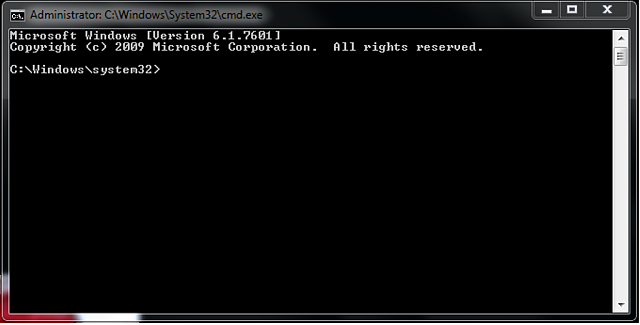
4. Type in "chkdsk /X /f sd card letter:" or "chkdsk sd card letter: /f ", for example,"chkdsk /X /f G:" or "chkdsk h: /f".
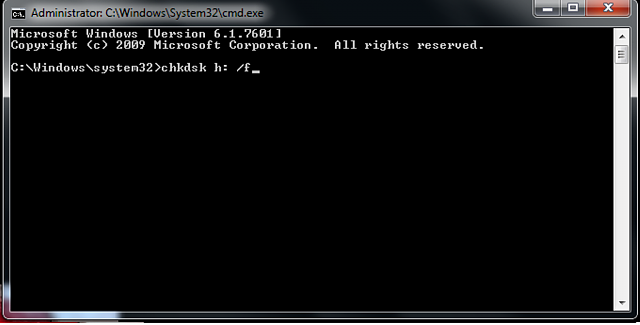
After finishing all the steps, Windows will have checked and fixed the file system of the SD card. It usually takes several minutes. After that, if you see "Windows has made corrections to the file system" in the command window, then congratulations! The damaged SD card is successfully fixed and you can see your data again. If not, you should try a third-party data recovery software to retrieve your files from the damaged SD card and repair it by formatting.
Once the process has been completed, you can go ahead and pop the SD card back into your Android device and see if the issue has been resolved.
Step 6 : Use EaseUS Data Recovery Wizard to recover data from damaged SD card
1. Connect the corrupted SD card to your PC, launch EaseUS's data recovery software, select the card and click "Scan".
2. A quick scan will first start to search all the lost and existing data on the SD card. And after that, a deep scan will automatically launch in order to find more files.
2. A quick scan will first start to search all the lost and existing data on the SD card. And after that, a deep scan will automatically launch in order to find more files.
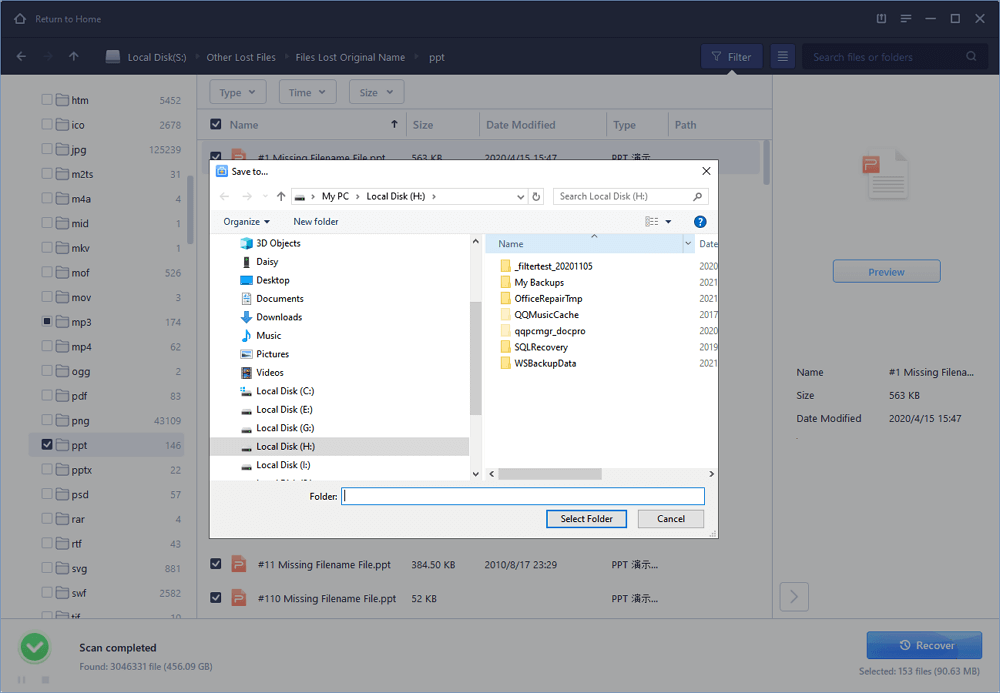
3. After the scan, choose those files you want to recover and click the "Recover" button to retrieve them back.
Final Words :
So finally through this article, you have got to know about the method by which the SD card could be repaired and hence the data in it could be saved for the further access. We have tried to present the method in easy to grab manner and we believe that you could possibly get to know about it easily. Hope that you would have liked the information in this post, if it is so then please share it with others. Also, do not forget to share the post with others, let most of the people know about the method. Share your comments about the post through using the comment box below. At last never the fewer thanks for reading this post!
Airpwn: A Wireless Packet Injector
 "Airpwn is a framework for 802.11 (wireless) packet injection. Airpwn listens to incoming wireless packets, and if the data matches a pattern specified in the config files, custom content is injected "spoofed" from the wireless access point. From the perspective of the wireless client, airpwn becomes the server." read more...
Website: http://airpwn.sourceforge.net

Related word
miércoles, 3 de junio de 2020
Deepin Or UbuntuDDE
I'm sure nowadays many Deepin users are thinking in changing to UbuntuDDE, so let's explain some differences between both Linux distros.
1. Community
At least in the main telegram channel Deepin has more than 2.000 users, but UbuntuDDE is new in beta version and have about 500 users.
2. Boot
Despite de booting sound is the same in both distros, Deepin's animation is nicer than ubuntu's which uses a too bright background.


3. Default memory and CPU usage
The CPU usage is similar, but Deepin by default is using more processes, more network connections and more drivers than UbuntuDDE.


4. Workspaces
UbuntuDDE allows up to 7 workspaces meanwhile Deepin right now only allows 4.
Is not only more workspaces for UbuntuDDE, it's also the more eficient way to display them.


5. Software Versions
Deepin is based on Debian so the program versions on store and apt are old but stable, and can have problems with the old libraries installed on the system when compiling new software.
We can see below that Ubuntu's compiler version is quite new, the 9.3.0 which is quite well, but Deepin's version is 6.3.0.


Regarding the kernels, UbuntuDDE has the 5.4.0.21 and Deepin the 4.15.0-30, the libc in both systems is updated.
6. The store
Deepin's store is fast and polished and contain the main software, but and the UbuntuDDE


Conclussions
Deepin is the most used of both and it's the original one, but many users are trying the UbuntuDDE (which is beta for now) because the need of using recent versions, also the 4 workspaces on Deepin is another limitation for some Linux users. Probably Deepin v20 will overcome the limitations but the main decision is between Debian as base system or ubuntu, and for more users the trend in workstations is ubuntu.
Gallery


More info


1. Community
At least in the main telegram channel Deepin has more than 2.000 users, but UbuntuDDE is new in beta version and have about 500 users.
2. Boot
Despite de booting sound is the same in both distros, Deepin's animation is nicer than ubuntu's which uses a too bright background.


3. Default memory and CPU usage
The CPU usage is similar, but Deepin by default is using more processes, more network connections and more drivers than UbuntuDDE.


4. Workspaces
UbuntuDDE allows up to 7 workspaces meanwhile Deepin right now only allows 4.
Is not only more workspaces for UbuntuDDE, it's also the more eficient way to display them.


5. Software Versions
Deepin is based on Debian so the program versions on store and apt are old but stable, and can have problems with the old libraries installed on the system when compiling new software.
We can see below that Ubuntu's compiler version is quite new, the 9.3.0 which is quite well, but Deepin's version is 6.3.0.


Regarding the kernels, UbuntuDDE has the 5.4.0.21 and Deepin the 4.15.0-30, the libc in both systems is updated.
6. The store
Deepin's store is fast and polished and contain the main software, but and the UbuntuDDE


Conclussions
Deepin is the most used of both and it's the original one, but many users are trying the UbuntuDDE (which is beta for now) because the need of using recent versions, also the 4 workspaces on Deepin is another limitation for some Linux users. Probably Deepin v20 will overcome the limitations but the main decision is between Debian as base system or ubuntu, and for more users the trend in workstations is ubuntu.
Gallery


More info
martes, 2 de junio de 2020
$$$ Bug Bounty $$$
What is Bug Bounty ?

A bug bounty program, also called a vulnerability rewards program (VRP), is a crowdsourcing initiative that rewards individuals for discovering and reporting software bugs. Bug bounty programs are often initiated to supplement internal code audits and penetration tests as part of an organization's vulnerability management strategy.
Many software vendors and websites run bug bounty programs, paying out cash rewards to software security researchers and white hat hackers who report software vulnerabilities that have the potential to be exploited. Bug reports must document enough information for for the organization offering the bounty to be able to reproduce the vulnerability. Typically, payment amounts are commensurate with the size of the organization, the difficulty in hacking the system and how much impact on users a bug might have.
Mozilla paid out a $3,000 flat rate bounty for bugs that fit its criteria, while Facebook has given out as much as $20,000 for a single bug report. Google paid Chrome operating system bug reporters a combined $700,000 in 2012 and Microsoft paid UK researcher James Forshaw $100,000 for an attack vulnerability in Windows 8.1. In 2016, Apple announced rewards that max out at $200,000 for a flaw in the iOS secure boot firmware components and up to $50,000 for execution of arbitrary code with kernel privileges or unauthorized iCloud access.
While the use of ethical hackers to find bugs can be very effective, such programs can also be controversial. To limit potential risk, some organizations are offering closed bug bounty programs that require an invitation. Apple, for example, has limited bug bounty participation to few dozen researchers.

A bug bounty program, also called a vulnerability rewards program (VRP), is a crowdsourcing initiative that rewards individuals for discovering and reporting software bugs. Bug bounty programs are often initiated to supplement internal code audits and penetration tests as part of an organization's vulnerability management strategy.
Many software vendors and websites run bug bounty programs, paying out cash rewards to software security researchers and white hat hackers who report software vulnerabilities that have the potential to be exploited. Bug reports must document enough information for for the organization offering the bounty to be able to reproduce the vulnerability. Typically, payment amounts are commensurate with the size of the organization, the difficulty in hacking the system and how much impact on users a bug might have.
Mozilla paid out a $3,000 flat rate bounty for bugs that fit its criteria, while Facebook has given out as much as $20,000 for a single bug report. Google paid Chrome operating system bug reporters a combined $700,000 in 2012 and Microsoft paid UK researcher James Forshaw $100,000 for an attack vulnerability in Windows 8.1. In 2016, Apple announced rewards that max out at $200,000 for a flaw in the iOS secure boot firmware components and up to $50,000 for execution of arbitrary code with kernel privileges or unauthorized iCloud access.
While the use of ethical hackers to find bugs can be very effective, such programs can also be controversial. To limit potential risk, some organizations are offering closed bug bounty programs that require an invitation. Apple, for example, has limited bug bounty participation to few dozen researchers.
Related news
viernes, 22 de mayo de 2020
Evolving Logic Until Pass Tests Automatically
Automating the automation is still a challenge, but in some cases it's possible under certain situations.
In 2017 I created logic-evolver, one of my experiments for creating logic automatically or better said evolving logic automatically.
In some way, the computer create its own program that satisfies a set of tests defined by a human.
https://github.com/sha0coder/logic-evolver
This implementation in rust, contains a fast cpu emulator than can execute one million instructions in less than two seconds. And a simple genetic algorithm to do the evolution.
Here we create the genetic algorithm, and configure a population of 1000 individuals, and the top 5 to crossover. We run the genetic algorithm with 500 cycles maximum.
Note that in this case the population are programs initially random until take the correct shape.

An evaluation function is provided in the run method as well, and looks like this:


In 2017 I created logic-evolver, one of my experiments for creating logic automatically or better said evolving logic automatically.
In some way, the computer create its own program that satisfies a set of tests defined by a human.
https://github.com/sha0coder/logic-evolver
This implementation in rust, contains a fast cpu emulator than can execute one million instructions in less than two seconds. And a simple genetic algorithm to do the evolution.
Here we create the genetic algorithm, and configure a population of 1000 individuals, and the top 5 to crossover. We run the genetic algorithm with 500 cycles maximum.
Note that in this case the population are programs initially random until take the correct shape.


The evaluation function receives a CPU object, to compute a test you need to set the initial parameters, run the program and set a scoring regarding the return value.
Related articles
jueves, 21 de mayo de 2020
W3AF
 "W3AF is a Web Application Attack and Audit Framework. The project goal is to create a framework to find and exploit web application vulnerabilities that is easy to use and extend. This project is currently hosted at SourceForge." read more...
More information
miércoles, 20 de mayo de 2020
Gridcoin - The Good
In this post we will take an in depth look at the cryptocurrency Gridcoin, we show how we found two critical design vulnerabilities and how we fixed them.
In the last past years we saw many scientific publications about cryptocurrencies. Some focused on theoretical parts [Source] and some on practical attacks against specific well-known cryptocurrencies, like Bitcoin [Source]. But in general there is a lack of practical research against alternative coins. Or did you know that there are currently over 830 currencies listed online? So we asked ourselves how secure are these currencies, and if they are not just re-branded forks of the Bitcoin source code?
Background
Gridcoin is an Altcoin, which is in active development since 2013. It claims to provide a high sustainability, as it has very low energy requirements in comparison to Bitcoin. It rewards users for contributing computation power to scientific projects, published on the BOINC project platform. Although Gridcoin is not as widespread as Bitcoin, its draft is very appealing as it attempts to eliminate Bitcoin's core problems. It possesses a market capitalization of $13,719,142 (2017/08/10).
Berkeley Open Infrastructure for Network Computing
To solve general scientific meaningful problems, Gridcoin draws on the well-known Berkeley Open Infrastructure for Network Computing (BOINC). It is a software platform for volunteer computing, initially released in 2002 and developed by the University of California, Berkeley. It is an open source software licensed under the GNU Lesser General Public License. The platform enables professionals in need for computation power to distribute their tasks to volunteers. Nowadays it is widely used by researchers with limited resources to solve scientific problems, for example, healing cancer, investigate global warming, finding extraterrestrial intelligence in radio signals and finding larger prime numbers.When launching a BOINC project, its maintainer is required to set up his own BOINC server. Project volunteers may then create accounts (by submitting a username, a password and an email address) and work on specific project tasks, called workunits. The volunteers can process the project tasks and transfer their solutions with a BOINC client.
BOINC architecture
BOINC uses a client-server architecture to achieve its rich feature set. The server component handles the client requests for workunits and the problem solutions uploaded by the clients. The solutions are validated and assimilated by the server component. All workunits are created by the server component and each workunit represents a chunk of a scientific problem which is encapsulated into an application. This application consists of one or multiple in-/output files, containing binary or ASCII encoded parameters.BOINC terminology
- iCPID
- The BOINC project server creates the internal Cross Project Identifier (iCPID) as a 16 byte long random value during account creation. This value is stored by the client and server. From this time on, the iCPID is included in every request and response between client and server
- eCPID
- The external Cross Project Identifier (eCPID) serves the purpose of identifying a volunteer across different BOINC projects without revealing the corresponding email address. It is computed by applying the cryptographic hash function MD5 to (iCPID,email) and thus has a length of 16 byte [Source].
eCPID = MD5(iCPID||email)
- Credits
- BOINC credits are generated whenever a host submits a solution to an assigned task. They are measured in Cobblestone, whereas one Cobblestone is equivalent to 1/200 of CPU time on a reference machine with 1,000 mega floating point operation per seconds [Source]
- Total Credit
- Total number of Cubblestones a user invested with his machines for scientific computations
- Recent Average Credit (RAC)
Gridcoin
As a fork of Litecoin, Gridcoin-Research is a blockchain based cryptocurrency and shares many concepts with Bitcoin. While Bitcoin's transaction data structure and concept is used in an unmodified version, Gridcoin-Research utilizes a slightly modified block structure. A Gridcoin-Research block encapsulates a header and body. The header contains needed meta information and the body encloses transactions. Due to the hashPrevBlockHeader field, which contains the hash of the previous block-header, the blocks are linked and form the distributed ledger, the blockchain. Blocks in the blockchain are created by so called minters. Each block stores a list of recent transactions in its body and further metadata in its header. To ensure that all transactions are confirmed in a decisive order, each block-header field contains a reference to the previous one. To regulate the rate in which new blocks are appended to the blockchain and to reward BOINC contribution, Gridcoin-Research implements another concept called Proof-of-Research. Proof-of-Research is a combination of a new overhauled Proof-of-BOINC concept, which was originally designed for Gridcoin-Classic and the improved Proof-of-Stake concept, inspired by alternative cryptocurrencies. |
| Fig. 1: Gridcoin block structure |
Gridcoin terminology
In order to understand the attacks we need to introduce some Gridcoin specific terms.- eCPID
- Identifier value from BOINC used in Gridcoin to identify the researcher.
- CPIDv2
- contains a checksum to prove that the minter is the owner of the used eCPID. We fully describe the content of this field in the last attack section.
- GRCAddress
- contains the payment address of the minter.
- ResearchAge
- is defined as the time span between the creation time of the last Proof-of-Research generated block with the user's eCPID and the time stamp of the last block in the chain measured in days.
- RSAWeight
- estimates the user's Gridcoin gain for the next two weeks, based on the BOINC contribution of the past two weeks.
Proof-of-Stake
Proof-of-Stake is a Proof-of-Work replacement, which was first utilized by the cryptocurrency Peercoin in 2012. This alternative concept was developed to showcase a working Bitcoin related currency with low power consumption. Therefore, the block generation process has been overhauled. To create a new valid block for the Gridcoin blockchain the following inequality have to be satisfied:
The kernel value represents the concatenation of the parameters listed in Table 2. The referenced unspent transaction output (UTXO) must be at least 16 hours old. The so called RSAWeight is an input value to the kernel computation, it's indicates the average BOINC work, done by a Gridcoin minter.
In direct comparison to Bitcoin's Proof-of-Work concept, it is notable that the hash of the previous block-header is not part of the kernel. Consequently, it is theoretically possible to create a block at any previous point in time in the past. To prevent this, Gridcoin-Research creates fixed interval checkpoint blocks. Once a checkpoint block is synchronized with the network, blocks with older time stamps became invalid. Considering the nature of the used kernel fields, a client with only one UTXO is able to perform a hash calculation each time nTime is updated. This occurs every second, as nTime is a UNIX time stamp. To be able to change the txPrev fields and thereby increase his hash rate, he needs to gain more UTXO by purchasing coins. Note that high UTXO and RSAWeight values mitigate the difficulty of the cryptographic puzzle, which increase the chance of finding a valid kernel. RSAWeight was explained above. Once a sufficient kernel has been found, the referenced UTXO is spent in a transaction to the creator of the block and included in the generated block. This consumes the old UTXO and generates a new one with the age of zero.
The Gridcoin-Research concept does not require much electrical power, because the maximum hash rate of an entity is limited by its owned amount of UTXOs with suitable age.
SHA256(SHA256(kernel)) < Target * UTXO Value + RSAWeight
The kernel value represents the concatenation of the parameters listed in Table 2. The referenced unspent transaction output (UTXO) must be at least 16 hours old. The so called RSAWeight is an input value to the kernel computation, it's indicates the average BOINC work, done by a Gridcoin minter.
In direct comparison to Bitcoin's Proof-of-Work concept, it is notable that the hash of the previous block-header is not part of the kernel. Consequently, it is theoretically possible to create a block at any previous point in time in the past. To prevent this, Gridcoin-Research creates fixed interval checkpoint blocks. Once a checkpoint block is synchronized with the network, blocks with older time stamps became invalid. Considering the nature of the used kernel fields, a client with only one UTXO is able to perform a hash calculation each time nTime is updated. This occurs every second, as nTime is a UNIX time stamp. To be able to change the txPrev fields and thereby increase his hash rate, he needs to gain more UTXO by purchasing coins. Note that high UTXO and RSAWeight values mitigate the difficulty of the cryptographic puzzle, which increase the chance of finding a valid kernel. RSAWeight was explained above. Once a sufficient kernel has been found, the referenced UTXO is spent in a transaction to the creator of the block and included in the generated block. This consumes the old UTXO and generates a new one with the age of zero.
The Gridcoin-Research concept does not require much electrical power, because the maximum hash rate of an entity is limited by its owned amount of UTXOs with suitable age.
Proof-of-Research
Minters relying solely on the Proof-of-Stake rewards are called Investors. In addition to Proof-of-Stake, Gridcoin gives minters a possibility to increase their income with Proof-of-Research rewards. The Proof-of-Research concept implemented in Gridcoin-Research allows the minters to highly increase their block reward by utilizing their BOINC Credits. In this case the minter is called a Researcher.
To reward BOINC contribution, relevant BOINC data needs to be stored in each minted block. Therefore, the software uses the BOINCHash data structure, which is encapsulated in the first transaction of each block. The structure encloses the fields listed in Table 6. The minting and verification process is shown in Figure 2 and works as follows:
To reward BOINC contribution, relevant BOINC data needs to be stored in each minted block. Therefore, the software uses the BOINCHash data structure, which is encapsulated in the first transaction of each block. The structure encloses the fields listed in Table 6. The minting and verification process is shown in Figure 2 and works as follows:
- A minter (Researcher) participates in a BOINC project A and performs computational work for it. In return the project server increases the users Total Credit value on the server. The server therefore stores the minter's email address, iCPID, eCPID and RAC.
- Statistical websites contact project server and down-load the statistics for all users from the project server (A).
- After the user earns credits, his RAC increases. Consequently, this eases the finding of a solution for the Proof-of-Stake cryptographic puzzle, and the user can create (mint) a block and broadcast it to the Gridcoin network.
- Another minter (Investor or Researcher) will receive the block and validate it. Therefore, he extracts the values from the BOINCHash data structure inside the block.
- The minter uses the eCPID from the BOINCHash to request the RAC and other needed values from a statistical website and compares them to the data extracted from the BOINCHash structure, in the event that they are equal and the block solves the cryptographic puzzle, the block is accepted.
 |
| Fig. 2: Gridcoin architecture and minting process |
Reward calculation
The total reward for a solved block is called the Subsidy and is computed as the sum of the Proof-of-Research and the Proof-of-Stake reward.
If a minter operates as an Investor (without BOINC contribution), the eCPID is set to the string Investor and all other fields of the BOINCHash are zeroed. An Investor receives only a relatively small Proof-of-Stake reward.Because the Proof-of-Research reward is much higher than its Proof-of-Stake counterpart, contributing to BOINC projects is more worth the effort.
Statistic Website
At the beginning of the blog post, the core concept behind BOINC was described. One functionality is the creation of BOINC Credits for users, who perform computational work for the project server. This increases the competition between BOINC users and therefore has a positive effect on the amount of computational work users commit. Different websites 4 collect credit information of BOINC users from known project servers and present them online. The Gridcoin client compares the RAC and total credit values stored in a new minted block with the values stored on cpid.gridcoin.us:5000/get_user.php?cpid=eCPID where eCPID is the actual value of the researcher. If there are differences, the client declines the block. In short, statistical websites are used as control instance for Gridcoin. It is obvious that gridcoin.us administrators are able to modify values of any user. Thus, they are able to manipulate the amount of Gridcoins a minter gets for his computational work. This is crucial for the trust level and undermines the general decentralized structure of a cryptocurrency.Project Servers
Gridcoin utilizes BOINC projects to outsource meaningful computation tasks from the currency. For many known meaningful problems there exist project servers 5 that validate solutions submitted by users, 6 and decide how many credits the users receive for their solutions. Therefore, the project servers can indirectly control the amount of Gridcoins a minter gets for his minted block via the total credit value. As a result, a Gridcoin user also needs to trust the project administrators. This is very critical since there is no transparency in the credit system of project server. If you want to know why decentralization is not yet an option, see our paper from WOOT'17.Attacks
In addition to the trust a Gridcoin user needs to put into the project server and statistic website administrators, Gridcoin suffers from serious flaws which allows the revelation of minter identities or even stealing coins. Our attacks do not rely on the Gridcoin trust issues and the attacker does not need to be in possession of specific server administrative rights. We assume the following two simple attackers with limited capability sets. The first one, is the blockchain grabber which can download the Gridcoin blockchain from an Internet resource and runs a program on the downloaded data. The second one, the Gridcoin attacker, acts as a normal Gridcoin user, but uses a modified Gridcoin client version, in order to run our attacks.Interestingly, the developer of Gridcoin tried to make the source code analysis somewhat harder, by obfuscating the source code of relevant functions.
 |
| Fig. 3: Obfuscated source code in Gridcoin [Source] |
Grab Gridcoin user email addresses
In order to protect the email addresses of Gridcoin Researchers, neither BOINC project websites nor statistical websites directly include these privacy critical data. The statistical websites only include eCPID entries, which are used to reward Gridcoin Researchers. However, the email addresses are hidden inside the computation of the BOINCHash (cf. Table 1). A BOINCHash is created every time a Researcher mints a new block and includes a CPIDv2 value. The CPIDv2 value contains an obfuscated email address with iCPID and a hash over the previous blockchain block.
By collecting the blockchain data and reversing the obfuscation function (cf. Figure 4 and Figure 7), the attacker gets all email addresses and iCPIDs ever used by Gridcoin Researchers. See the reversed obfuscation function in Figure 4 and Figure 5.
Evaluation
We implemented a deobfuscation function (cf. Figure 7) and executed it on the blockchain. This way, we were able to retrieve all (2709) BOINC email addresses and iCPIDs used by Gridcoin Researchers. This is a serious privacy issue and we address it with our fix (cf. The Fix).Steal Gridcoin users BOINC reward
The previous attack through deobfuscation allows us to retrieve iCPID values and email addresses. Thus, we have all values needed to create a new legitimate eCPID. This is required because the CPIDv2 contains the last block hash and requires a re-computation for every new block it should be used in. We use this fact in the following attack and show how to steal the computational work from another legitimate Gridcoin Researcher by mining a new Gridcoin block with forged BOINC information. Throughout this last part of the post, we assume the Gridcoin Minter attacker model where the attacker has a valid Gridcoin account and can create new blocks. However, the attacker does not perform any BOINC work. |
| Tab. 1: BOINCHash structure as stored and used in the Gridcoin blockchain. |
 |  |
| Fig. 4: Obfuscation function | Fig. 5: Deobfuscation function |
Evaluation
In order to verify our attacks practically, we created two virtual machines (R and A), both running Ubuntu 14.04.3 LTS. The virtual machine R contained a legitimate BOINC and Gridcoin instance. It represented the setup of a normal Gridcoin Researcher. The second machine A contained a modified Gridcoin-Research client 3.5.6.8 version, which tried to steal the Proof-of-Research reward of virtual machine R. Thus, we did not steal reward of other legitimate users. The victim BOINC client was attached to the SETI@home project 11 with the eCPID 9f502770e61fc03d23d8e51adf7c6291.
The victim and the attacker were in possession of Gridcoins, enabling them to stake currency and to create new blocks.
 |
| Fig. 6: CPIDv2 calculation deobfuscated |
Initially both Gridcoin-Research clients retrieved the blockchain from other Gridcoin nodes in the Gridcoin network.
 |
| Fig. 7: Reverse the CPIDv2 calculation to get iCPID and email address |
Once a block had been created and confirmed, the attacker received the increased coin reward with zero BOINC contribution done. The attack could only be detected by its victims because an outside user did not know the legitimate Gridcoin addresses a Researcher uses.
All blocks created with our victim's eCPID are shown in Table 2. Illegitimate blocks are highlighted. We were able to mint multiple illegitimate blocks, and thus stealing Research Age from our victim machine R. All nine blocks created and send by our attacker to the Gridcoin network passed the Gridcoin block verification, were confirmed multiple times, and are part of the current Gridcoin blockchain. During our testing timespan of approximately three weeks, the attacker machine was wrongfully rewarded with 72.4 Proof-of-Research generated Gridcoins, without any BOINC work. The results show that the attack is not only theoretically possible, but also very practical, feasible and effective. The attack results can be reproduced with our Gridcoin-Research-Attack client.
 |
| Tab. 2:Blocks minted with the victim's eCPID |
The Fix
In order to fix the security issue, we found one solution which does not require any changes to the BOINC source code nor the infrastructure. It is sufficient to change some parts of the already existing Gridcoin Beacon system. Thus, our solution is backwards compatible.The current Gridcoin client utilizes so called Beacons to register new eCPIDs and stores them as a transaction of 0.0001 Gridcoins in a Superblock which is created every 24 hours. A Beacon encloses the user's personal eCPIDs, a corresponding unused (but irreversible) CPIDv2, and the wallet's main Gridcoin payment address. Once the Superblock is created, the eCPIDs is bound to one Gridcoin payment address. During the block verification process this bond is unfortunately not checked. Furthermore, the existing Beacon system does not use any strong asymmetric cryptography to ensure authenticity and integrity of the broadcasted data. We propose to extend the Beacon system with public key cryptography. In detail, we suggest that a user binds his fresh public key PK_1 to a newly generated eCPID, and then storing them together in a Superblock. An initial Beacon would therefore contain a hashed (e.g. SHA-256) eCPID, the public key, a Nonce, and a cryptographic signature created with the corresponding secret key SK_1 of the public key. This allows only the owner of the secret key to create valid signatures over blocks created with his eCPID. Thus, an adversary first needs to forge a cryptographic signature before he can claim Proof-of-Research work of another Gridcoin user. Thus, he is not capable of stealing the reward of the user.
 |
| Beacon to create a eCPID, public/secret key pair bond |
For verification purposes nodes fetch the corresponding latest public key from one of the Superblocks. Furthermore, this Beacon structure allows a user to replace his previous public key associated with his eCPID. This is realized by submitting a new Beacon with a new public key PK_2, signed with his old secret key.
 |
| Beacon to update a eCPID, public/secret key pair bond |
All Beacons in the chain are verifiable and the latest public key is always authentic. The Nonce provide freshness for the signature input, and therefore prevent replay attacks against the Beacon system.
Note that the eCPID needs to be completely unknown to the network, when sending the initial Beacon, for this concept to work as intended. The hash function ensures, that the Beacon does not reveal the fresh eCPID. As a result, an attacker is unable to mint with a eCPID even if he was able to intercept an initial Beacon and replaced the public key and signature with his own parameters, beforehand. This solution does not require any changes in the BOINC source code or the project servers.
Sign a block
In order to claim the Proof-of-Research reward for a newly created block, the Gridcoin minter computes a signature over the hash of the blockheader. Afterwards, he stores the resulting value at the end of the corresponding block in a new field. The private key used for the signature generation must correspond to the advertised public key by the user. It is important to note that the signature value is not part of the Merkle tree, and thus does not change the blockheader. In the end, the signature can then be verified by every other Gridcoin user via the advertised public key corresponding to the eCPID of the Gridcoin minter.Responsible Disclosure
The attacks and the countermeasures were responsibly disclosed to the Gridcoin developer on the 14th of September, 2016. The developer used our proposed countermeasures and started to implement a new version. Since version 3.5.8.8, which is mandatory for all Gridcoin users, there exists an implementation, which contains countermeasures to our reward stealing attack.See our next blog post, why Gridcoin is still insecure and should not be used anymore.
Further Reading
A more detailed description of Gridcoin and the attacks will be presented at WOOT'17, the paper is available here.
Authors
Tobias Niemann
Juraj Somorovsky
Read more
Suscribirse a:
Entradas (Atom)